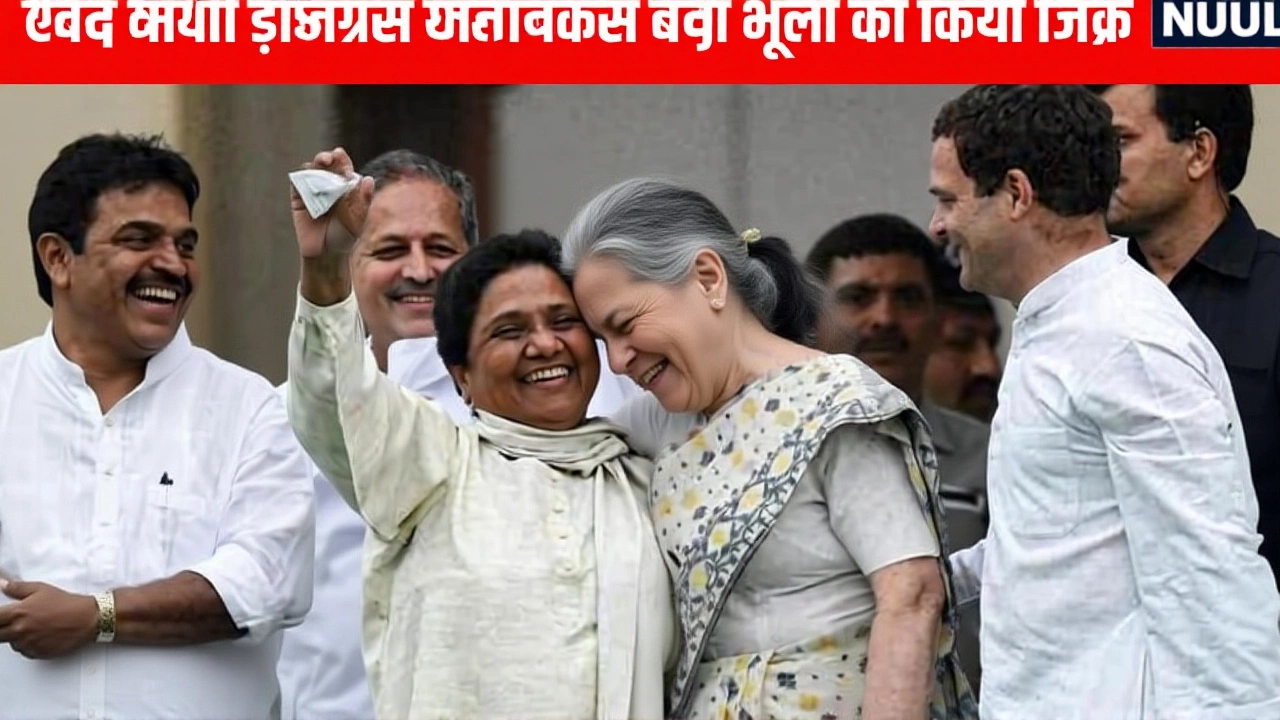
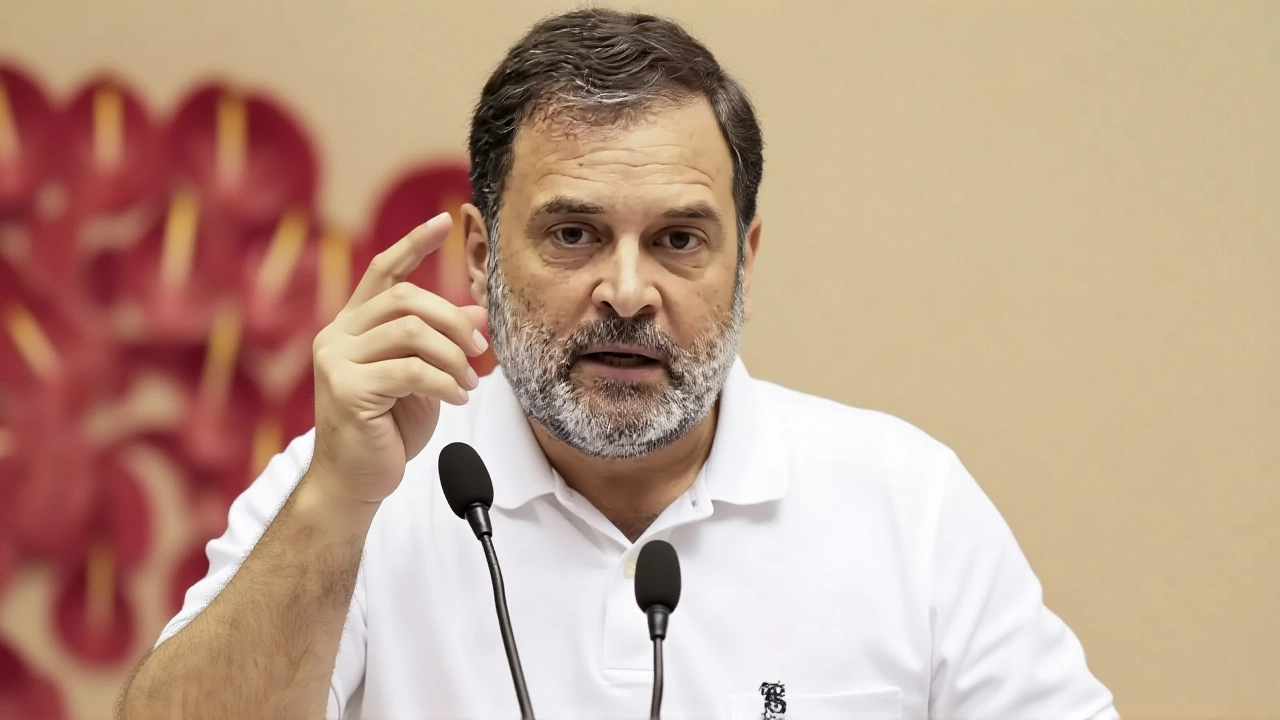
There is a persistent rumor circulating on social media claiming that Rahul Gandhi, the senior leader of the Indian National Congress, recently admitted to a major strategic blunder by saying, "A big mistake was made by us in the 90s." The alleged quote suggests the party ignored Uttar Pradesh during that decade, allowing rivals to gain ground. Here’s the thing: after digging through available transcripts, news reports, and video archives, there is absolutely no evidence this statement ever happened.
The search for this specific admission came up empty. No credible source—be it a major newspaper, a verified broadcast transcript, or an official party release—contains this phrase or its Hindi equivalent ("90 ke dashak mein humse badi galti hui"). It appears to be another piece of political folklore designed to stir debate without factual backing. But while the Rahul Gandhi story is a myth, the actual political landscape of Uttar Pradesh right now is very real, very loud, and shifting dramatically.
The Real Story: Mayawati’s Massive Comeback Rally
If you’re looking for headlines shaking up Uttar Pradesh politics, they aren’t coming from Delhi-based Congress introspection. They’re coming from Lucknow. On October 9, Mayawati, the supremo of the Bahujan Samaj Party (BSP), pulled off a massive rally at Rama Bai Ambedkar Maidan. This wasn’t just any gathering; analysts are calling it her first mega-rally of this scale in nearly nine years.
The timing is significant. Held on Kanshi Ram Jayanti, the event was clearly staged as a launchpad for the 2027 Uttar Pradesh Legislative Assembly elections. The turnout was described as reigniting hopes for a BSP resurgence. Presenter Hemant, analyzing the event for his program "Facts & Figures," noted the sheer size of the crowd and the palpable energy. This signals a serious recalibration of caste arithmetic in the state, with Mayawati attempting to reclaim space from both the BJP and the SP.
Yogi Adityanath vs. The Opposition: Corruption Allegations
Meanwhile, the current government isn't sitting idle. Yogi Adityanath, the Chief Minister of Uttar Pradesh and leader of the Bharatiya Janata Party (BJP), has been aggressively targeting the previous administration. His latest salvo focuses on corruption allegations against the Samajwadi Party (SP) under former Chief Minister Akhilesh Yadav.
The numbers Yogi cites are stark. He claims the Detailed Project Report (DPR) for the JPNIC building was estimated at ₹200 crore, but the final expenditure ballooned to ₹800 crore, leaving the project incomplete. Similarly, he alleges the Gomti River Front project saw costs jump from a DPR estimate of ₹300 crore to an actual spend of ₹1,400 crore. These accusations form the core of the BJP’s narrative heading into future elections: that the SP era was defined by financial mismanagement and systemic corruption in recruitment and infrastructure.
Historical Context: The 1990s Myth vs. Reality
So why does the fake Rahul Gandhi quote about the 1990s keep surfacing? It taps into a genuine historical anxiety for the Congress party. The 1990s were indeed a turbulent decade for Uttar Pradesh, marked by the rise of identity politics, muscle power, and crime intertwining with governance. Documentary-style content often highlights this era as one where traditional parties lost their grip due to internal fragmentation and external challenges.
However, conflating this historical analysis with a direct confession from Rahul Gandhi is misleading. There is no record of him making such a statement. The confusion likely stems from broader critiques of Congress’s organizational decline in the state over the last three decades, which have been discussed by various political commentators, but never attributed to this specific quote by the party’s national president.
What This Means for Voters
The absence of this quote doesn't mean the Congress party isn't grappling with its past. It means voters need to look at current actions rather than viral rumors. With Mayawati re-entering the big league, Yogi Adityanath doubling down on anti-corruption rhetoric, and the SP trying to rebuild trust, the 2027 assembly elections will be a three-way (or more) contest. The "Yogi Factor" remains strong, but the opposition alliance dynamics are fluid.
For anyone following Indian politics, the lesson here is clear: verify before you share. In an era of deepfakes and fabricated quotes, the most powerful tool is skepticism. The real drama in Uttar Pradesh isn't in what Rahul Gandhi didn't say; it's in what Mayawati, Yogi, and Akhilesh are doing right now.
Frequently Asked Questions
Did Rahul Gandhi actually say "A big mistake was made by us in the 90s"?
No, there is no verifiable evidence, transcript, or news report confirming that Rahul Gandhi made this statement. Extensive searches of available sources yield no results linking him to this specific quote regarding the Congress party's performance in Uttar Pradesh during the 1990s.
What was the significance of Mayawati's rally in Lucknow?
Held on October 9 at Rama Bai Ambedkar Maidan, the rally was Mayawati's first large-scale public meeting in approximately nine years. It was strategically timed for Kanshi Ram Jayanti and viewed as a key move to position the Bahujan Samaj Party for the 2027 Uttar Pradesh Legislative Assembly elections.
What corruption allegations did Yogi Adityanath make against the Samajwadi Party?
Chief Minister Yogi Adityanath alleged massive cost overruns in projects under the Akhilesh Yadav-led SP government. Specifically, he cited the JPNIC building rising from ₹200 crore to ₹800 crore, and the Gomti River Front project increasing from ₹300 crore to ₹1,400 crore, claiming these funds were misused.
Why is the 1990s period significant in Uttar Pradesh politics?
The 1990s in Uttar Pradesh were characterized by intense political volatility, the rise of caste-based voting blocs, and high levels of crime intertwined with politics. While it was a challenging decade for established parties like the Congress, there is no documented admission by Rahul Gandhi specifically labeling it as a singular "mistake" in recent discourse.